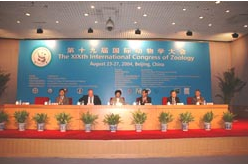
From September 2 to 5, 2026, the VII International Conference on Malaria and other blood Parasites of Wildlife and the IV International Symposium on Wildlife Diseases Research Network (WDRN)" were held in Badajoz, Spain. Guided by the broader concept of "One Health," the conference emphasized the intrinsic connections between human, animal, and environmental health, broke down research barriers, promoted transnational and interdisciplinary collaboration, and enhanced the capacity for prevention and control of wildlife vector-borne diseases.
The conference was co-hosted by the University of Extremadura, Spain; the Wildlife Malaria Research Network (WIMANET); the European Cooperation in Science and Technology (COST); and the International Society of Zoological Sciences (ISZS), with the University of Extremadura serving as the local organizer. The conference was supported by the Department of International Cooperation of the China Association for Science and Technology (CAST).
Professor Santiago Merino, President of the International Society of Zoological Sciences and a professor at the National Museum of Natural Sciences of Spain; Professor Jenny Dunn, Executive Chair of the Wildlife Malaria Research Network and a professor at Keele University, UK; and several leaders and experts from the European Cooperation in Science and Technology, the Regional Government of Extremadura, the Badajoz City Council, and the University of Extremadura were invited to attend the conference. The conference was held primarily in person, supplemented by online participation. More than 200 experts and scholars from over 30 countries worldwide, including China, the United States, Spain, Germany, the United Kingdom, France, Switzerland, Brazil, and Colombia, attended the conference.
The opening ceremony was held on the morning of September 2 in the lecture hall of the School of Medicine at the University of Extremadura. Professor Alfonso Marzal of the University of Extremadura, Chair of the conference, presided over the opening ceremony and delivered the first speech. He noted that the avian malaria symposium had been held there in 2008, and twenty years later, the research community has continued to grow, embracing new technologies, new questions, and interdisciplinary development, while the spirit of collaboration, the original aspiration of friendship, and scientific enthusiasm remain unchanged — this is also the core of WIMANET and this conference. The conference upholds the "One Health" concept, bringing together more than 200 scholars from over 30 countries and more than 70 universities and research institutions, covering fields such as parasites, vectors, wildlife, ecology, genomics, and emerging infectious diseases. He expressed sincere gratitude to the scientific and organizing committees, keynote speakers, session chairs, volunteers, co-organizers, sponsors, and all participants. Finally, he wished the conference complete success and hoped everyone would present results, exchange ideas, deepen cooperation, and strengthen friendships.
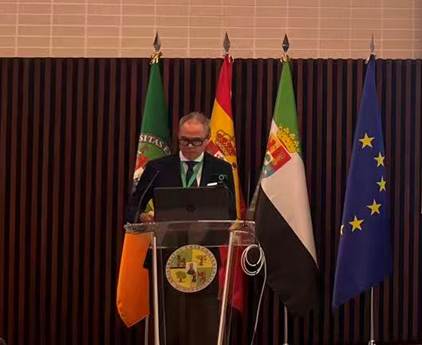
Professor Alfonso Marzal delivering his speech
Professor Santiago Merino, President of the International Society of Zoological Sciences and a professor at the National Museum of Natural Sciences of Spain, delivered a speech on behalf of ISZS, a co-organizer of the conference. He stated that globalization has closely connected the world while also bringing severe public health challenges. Increased contact between humans, livestock, and wildlife, along with habitat reduction, has raised the risks of emerging infectious diseases and zoonoses. Livestock diseases can also spill back to wildlife, threatening biodiversity. Climate change is exacerbating the spread of pathogens. Therefore, we need to strengthen research and emergency preparedness, and more importantly, prevent problems at the source. This is precisely the core value of "One Health" interdisciplinary research, which helps clarify bidirectional transmission and enable precise prevention and control. Finally, he stated that ISZS is honored to co-organize this conference and looks forward to sharing the latest findings and discussing the harms, transmission, and ecological factors of diseases.
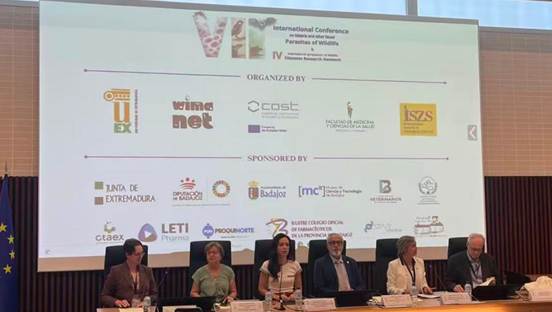
Professor Santiago Merino (first from right) delivering his speech
Leaders from the Badajoz City Council, the University of Extremadura, the Wildlife Malaria Research Network, and the European Cooperation in Science and Technology also delivered speeches successively, expressing their wishes and affirmation for the successful holding of the conference.
The conference featured a total of 7 plenary reports: on the morning of the 2nd, Dr. Tanja Himmel presented "Beyond the blood: insights into tissue development in avian haemosporidian parasites " and Professor Jianshi Jin presented " Investigating the Shared Resistome and Phylosymbiosis of Wild or Wild-derived Rodents using Microbiota Profiling"; on the afternoon of the 2nd, Dr. Kasun Bodawatta presented " Host-blood parasites associations through a microbiome lens"; on the morning of the 3rd, Professor Ananías Escalante presented "Comparative genomics and evolutionary diversification in mammalian Plasmodium"; on the afternoon of the 3rd, Professor Nubia Matta presented "Unlocking Megadiverse Host–Parasite Networks: Ecological Patterns and Biodiversity Insights from the GERPH Blood Parasite Collection "; on the morning of the 4th, Professor Philippe Christe presented "How Do Blood Parasites Spread? Integrating Ecology, Diversity, and Transmission in Bats and Birds"; and on the morning of the 5th, Professor Pedro Alonso presented "One Health: Integrating Public Health Targets."
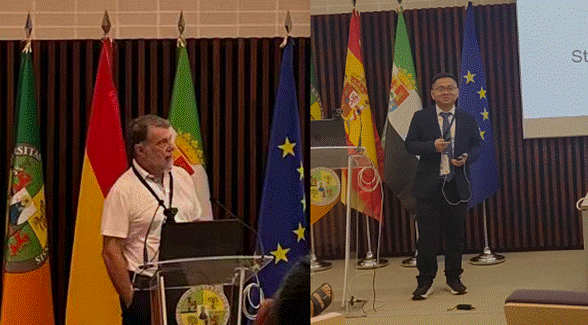
Plenary speakers: Pedro Alonso and Jianshi Jin
In addition to the plenary sessions, four days of academic discussions were held from the 2nd to the 5th, including 69 oral presentations and 49 posters. Among them, eight representatives were from China including the Institute of Zoology, Chinese Academy of Sciences and Beijing Normal University. Professor Jianshi Jin from Institute of Zoology, Chinese Academy of Sciences, Executive Deputy Director of ISZS, gave a plenary presentation; Dr. Wenhua Xiong, Secretary-General of ISZS and Associate Editor of Integrative Zoology, presented a poster on behalf of ISZS; and Dr. Xi Huang from Beijing Normal University gave an oral presentation.
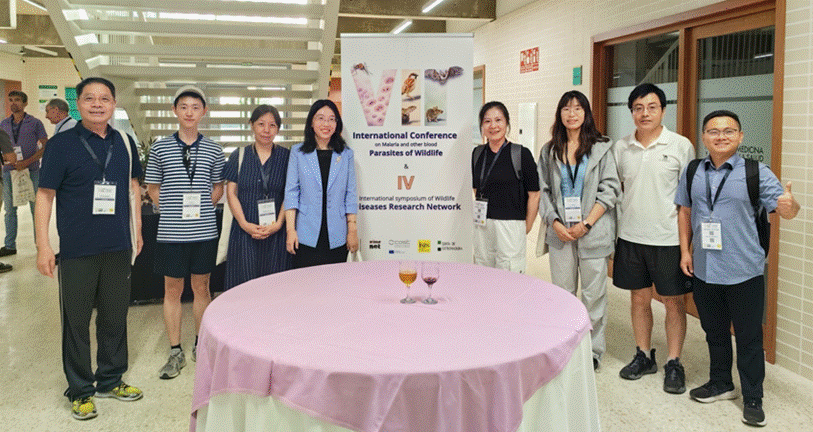
Some representatives of the Chinese delegation. From left: Hongxuan He, Cong Yu, Wei Zhang, Wenhua Xiong, Xi Huang, Meijun Liu, Xianfeng Yi, Jianshi Jin
This conference was the fourth WDRN conference and the second to be held overseas, helping to further enhance the international influence of ISZS. The conference promoted transnational cooperation and exchange in the field of wildlife disease research, strengthened global capacity for wildlife disease surveillance and control, and advanced the popularization and application of related technologies.
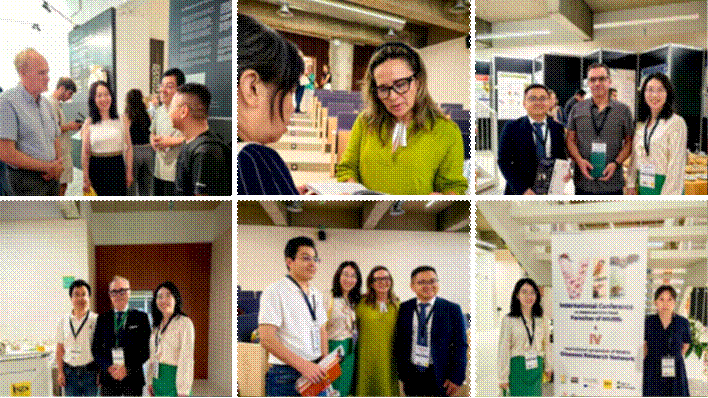
Scenes from the conference